
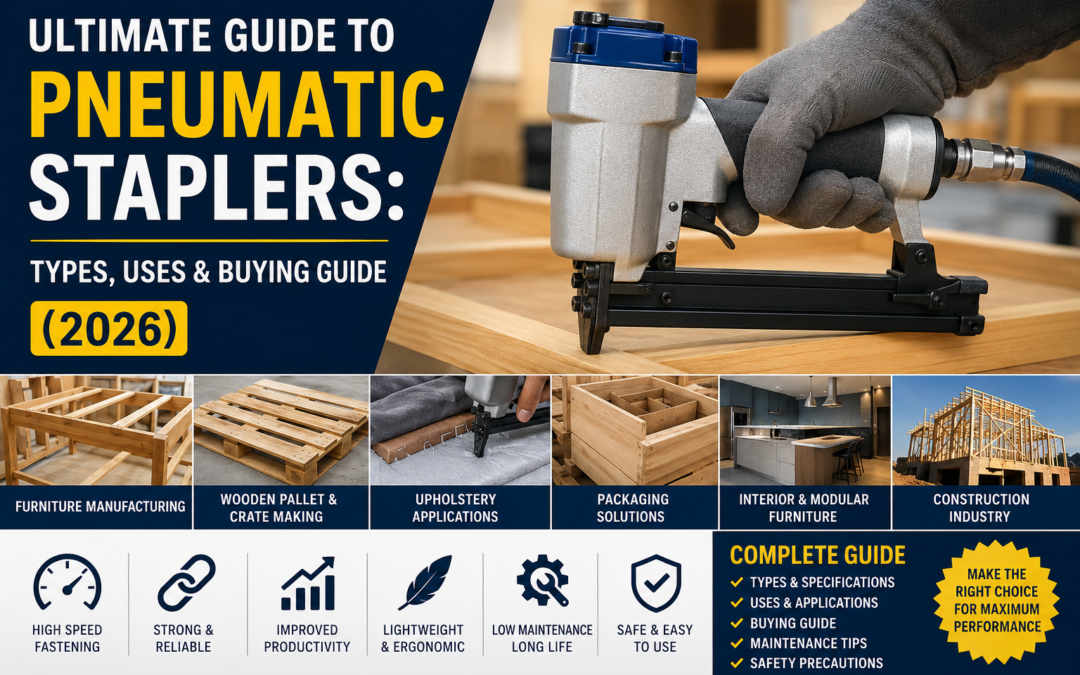
Pneumatic staplers have become one of the most essential fastening tools across industries such as furniture manufacturing, packaging, upholstery, woodworking, pallet production, and construction. Powered by compressed air, these tools provide faster, stronger, and more consistent fastening than manual staplers, helping businesses improve productivity while reducing operator fatigue.
Whether you’re selecting your first industrial stapler or upgrading your existing equipment, this guide covers everything you need to know from how pneumatic staplers work to choosing the right model for your application.
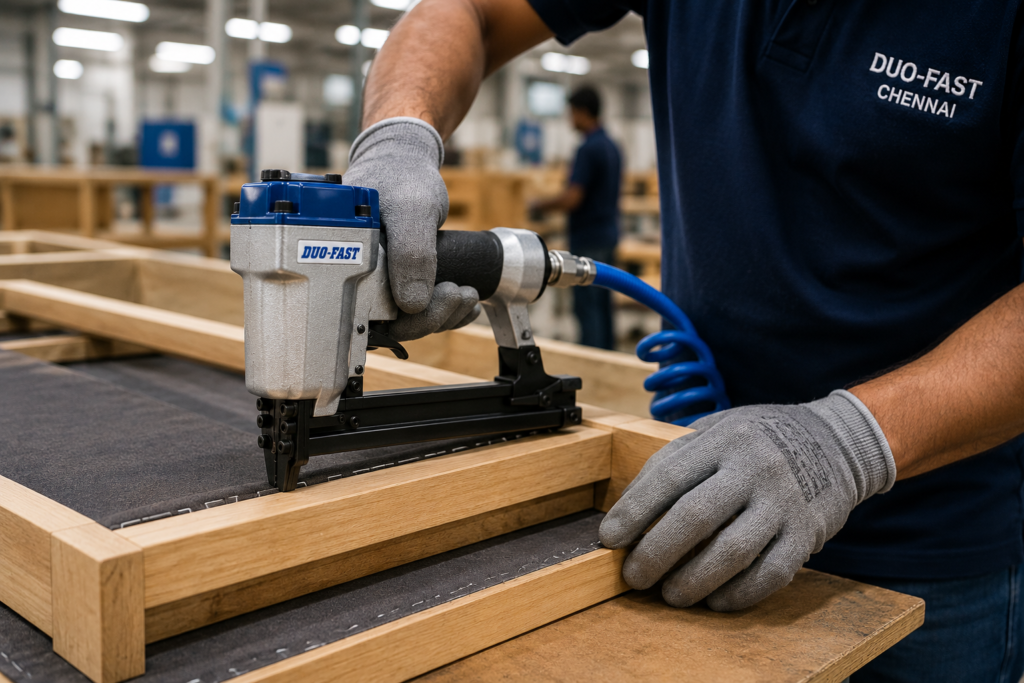
A professional industrial pneumatic stapler in use on a wooden furniture assembly line.
Table of Contents
- Why Choose Duo Fast Chennai?
- What is a Pneumatic Stapler?
- How Does a Pneumatic Stapler Work?
- Types of Pneumatic Staplers
- Benefits of Pneumatic Staplers
- Industrial Applications
- Pneumatic Stapler Specifications
- How to Choose the Right Pneumatic Stapler
- Maintenance Tips
- Safety Tips
- Frequently Asked Questions
What is a Pneumatic Stapler?
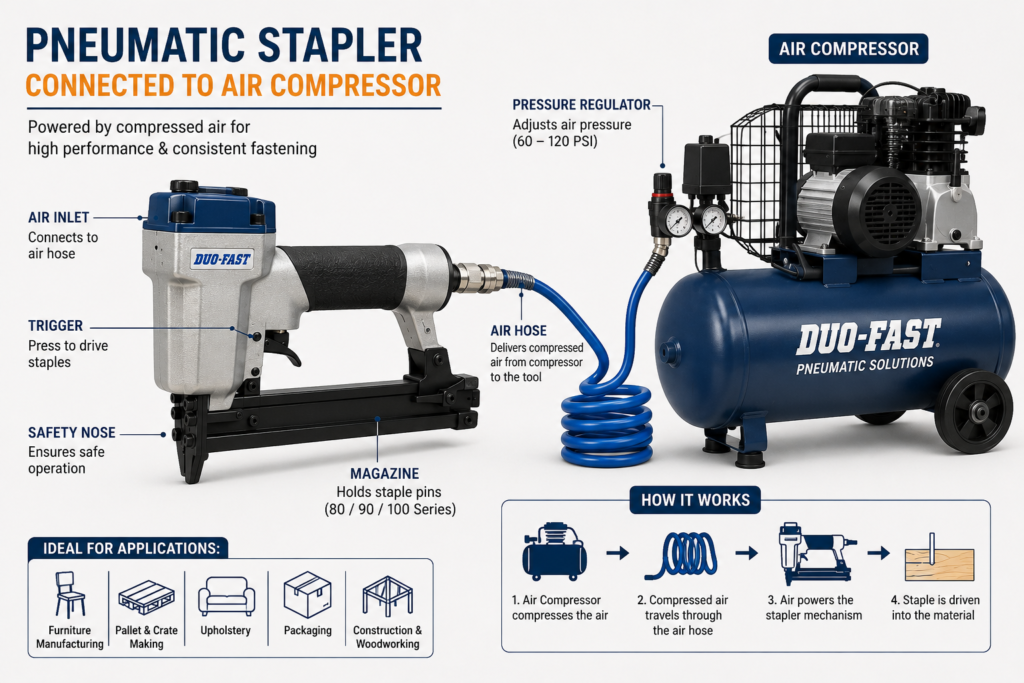
A pneumatic stapler is an air-powered fastening tool that drives staple pins into materials using compressed air supplied by an air compressor. Unlike manual staplers, pneumatic staplers deliver high-speed, precise, and consistent fastening, making them ideal for industrial production environments.
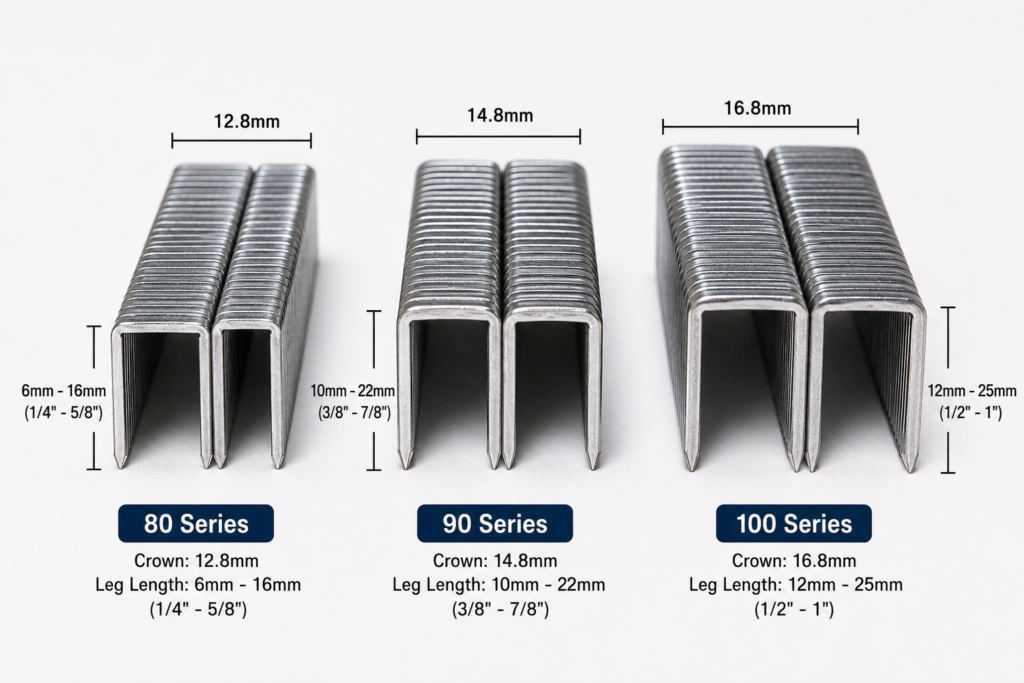
They are commonly used with 80 Series, 90 Series, and 100 Series staple pins, depending on the application and material thickness.
How Does a Pneumatic Stapler Work?
The stapler connects to an air compressor through an air hose. When the trigger is pressed:
- Compressed air enters the tool.
- The internal piston moves rapidly.
- The driver assembly pushes the staple into the material.
- The piston returns automatically, ready for the next staple.
This mechanism enables fast and efficient fastening with minimal physical effort.
Types of Pneumatic Staplers
Upholstery Staplers
Designed for fabric, leather, foam, and soft materials used in furniture and automotive interiors.
Common Uses
- Sofa manufacturing
- Car seat upholstery
- Cushion production
Heavy-Duty Pneumatic Staplers
Suitable for thicker materials and demanding industrial applications.
Common Uses
- Wooden pallets
- Crates
- Packaging
- Timber framing
Fine Wire Staplers
Ideal for delicate work requiring clean finishes.
Common Uses
- Cabinets
- Decorative trims
- Interior woodworkin
Benefits of Pneumatic Staplers
- Faster fastening speed
- Consistent staple depth
- Reduced operator fatigue
- High production efficiency
- Strong fastening performance
- Low maintenance
- Long service life
- Improved workplace safety
Industrial Applications
Furniture Manufacturing
Used for assembling chairs, tables, wardrobes, and wooden frames.
Upholstery Industry
Ideal for fixing fabric, leather, and foam.
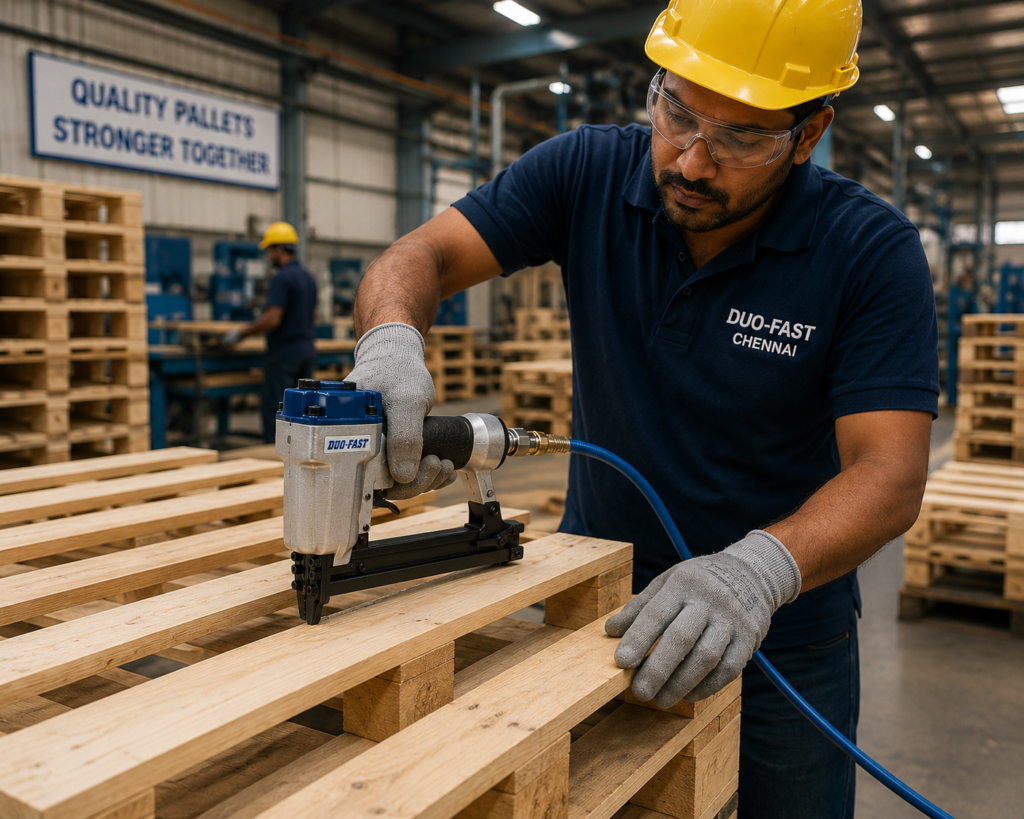
Wooden Pallet Manufacturing
Perfect for assembling export pallets.
Packaging Industry
Used in wooden boxes, export crates, and packaging units.
Interior Decoration
Fastening MDF, plywood, laminates, and trims.
Modular Kitchen Manufacturin
Used during cabinet assembly and finishing.
Construction Industry
Suitable for light framing, insulation, and wood panel installation.
Pneumatic Stapler Specifications
| Specification | Details |
|---|---|
| Power Source | Compressed Air |
| Operating Pressure | 60–120 PSI |
| Air Inlet | 1/4 Inch |
| Staple Series | 80, 90, 100 Series |
| Staple Length | 6–50 mm (model dependent) |
| Magazine Capacity | 100–160 Staples |
| Weight | 1.0–2.5 kg |
| Trigger Type | Sequential / Contact |
| Body Material | Aluminum Alloy |
| Applications | Furniture, Packaging, Upholstery, Construction |
How to Choose the Right Pneumatic Stapler
When selecting a pneumatic stapler, consider:
- Material thickness
- Staple pin series compatibility
- Required staple length
- Air compressor pressure
- Weight and ergonomics
- Production volume
- Ease of maintenance
- Spare parts availability
Maintenance Tips
- Lubricate the tool regularly.
- Drain moisture from the air compressor.
- Keep the magazine clean.
- Use the recommended air pressure.
- Inspect hoses and fittings.
- Store the tool in a dry location.
Safety Tips
- Always wear safety glasses.
- Disconnect the air supply before servicing.
- Never point the stapler at anyone.
- Use the correct staple size.
- Check air pressure before operation.
- Keep hands away from the firing area.
Frequently Asked Questions
1. What is a pneumatic stapler used for?
Pneumatic staplers are used for furniture manufacturing, upholstery, wooden pallet production, packaging, construction, and woodworking applications.
2. What air pressure is required for a pneumatic stapler?
Most pneumatic staplers operate efficiently between 60 and 120 PSI, depending on the model and the material being fastened.
3. Which staple series are commonly used?
The most common options are 80 Series, 90 Series, and 100 Series staple pins, each designed for different materials and applications.
4. Can a pneumatic stapler be used for hardwood?
Yes. When paired with the appropriate staple length, correct air pressure, and a suitable heavy-duty model, pneumatic staplers can fasten many hardwood applications.
5. How often should I maintain my pneumatic stapler?
Clean the magazine regularly, lubricate moving parts as recommended by the manufacturer, and inspect air hoses and fittings before use. Routine maintenance helps extend tool life and maintain consistent performance.
Why Choose Duo Fast Chennai?
At Duo Fast Chennai, we supply high-quality pneumatic staplers, staple pins, coil nails, and industrial fastening solutions for manufacturers across multiple industries. We focus on reliable products, technical support, and helping customers choose the right fastening solution for their application.
Whether you need tools for furniture production, packaging, pallet manufacturing, or construction, our team can help you select the right equipment and consumables.